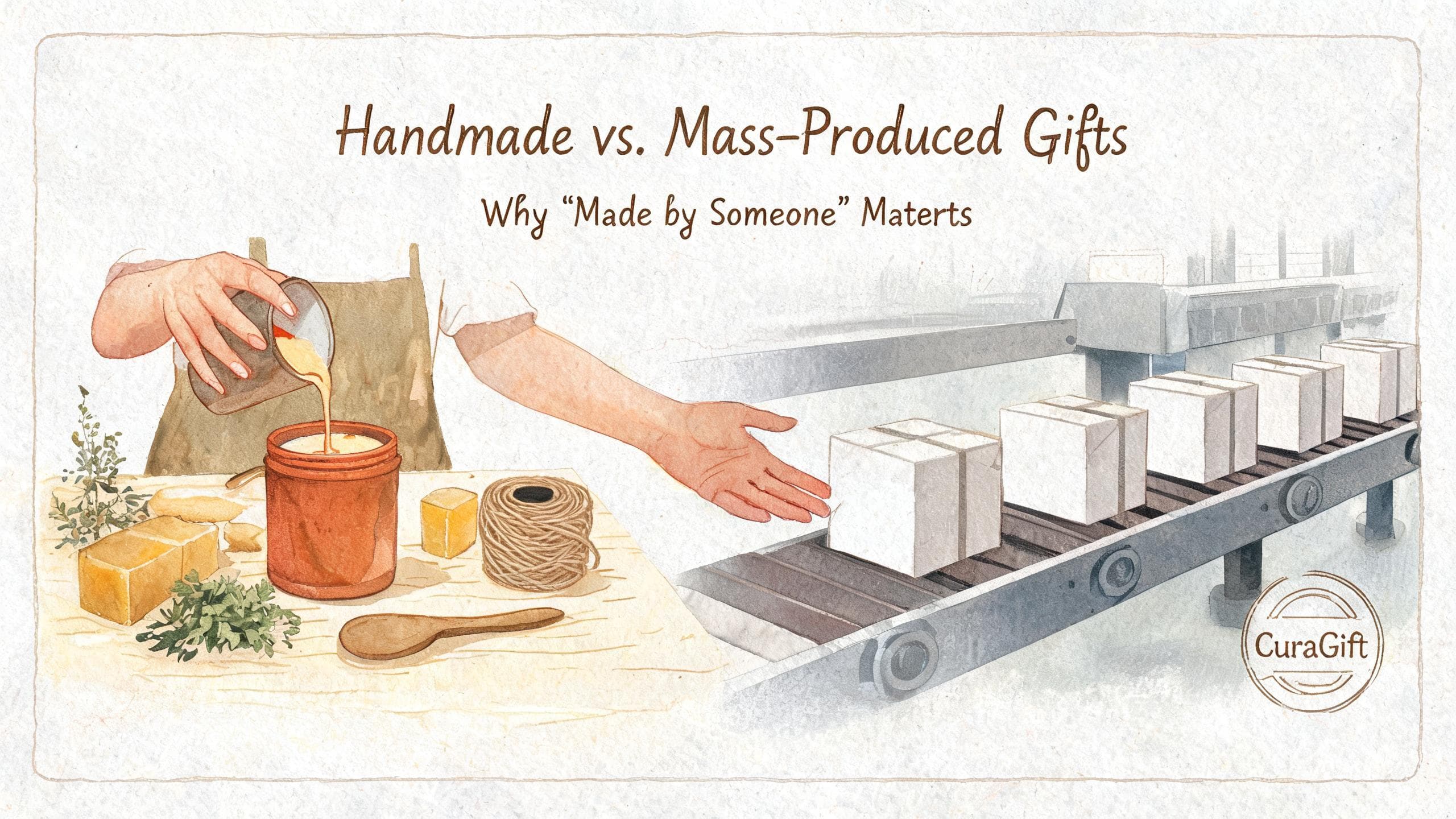
Handmade vs Mass-Produced Gifts: Why "Made by Someone" Wins
Is handmade really better? We break down why handcrafted gifts feel more meaningful, last longer, and say more than anything you'd find in a big-box store.
Quick answer
Handmade gifts usually beat mass-produced ones because they make the effort visible, and gifting research shows perceived thoughtfulness — not price — drives how much a gift is valued. They do not have to cost more: a $15 hand-poured candle or a $20 knitted scarf can outperform a $100 mass-produced item.
Walk into any department store and you'll find rows and rows of gifts — perfectly packaged, uniformly made, priced for every budget. They're fine. They're just... fine. But when was the last time a mass-produced gift made you feel something? Handmade gifts hit differently, and there's a reason for that.
The numbers are striking: in Etsy's 2024 survey, 72% of 18-to-34-year-olds agreed that "a handmade gift feels more thoughtful than a mass-produced one," compared to 51% of those over 55. And the global personalized-gift market is now worth roughly $38 billion, growing about 9.5% per year, according to Grand View Research. Younger givers are actively choosing made-by-someone over made-by-machine.
Sustainability is part of the same story. Business Research Insights reports that 58% of global consumers now prefer personalized or eco-friendly gifts, and roughly 55% gravitate toward sustainable gift options when they are available. Handmade items fit this perfectly: they are usually produced in small batches with better materials, and they get kept and used longer — which is the core of "fewer things, better things."
Why do handmade gifts feel more personal?
There's a well-documented psychological effect called the "IKEA effect" — we value things more when we put effort into them. But it works in reverse too: we value things more when we know someone else put effort into them. A hand-poured candle isn't just wax and a wick — it's someone measuring, stirring, testing, and pouring each one individually. That human energy transfers.
When you give a handmade gift, you're not just giving an object — you're giving hours of someone's time, skill, and care. The recipient can feel that, even if they can't explain why.
5 Reasons Handmade Gifts Beat Mass-Produced
1. Each One Is Actually Unique
Mass-produced items are designed to be identical. Handmade items are designed to have character. Small imperfections — a slightly uneven edge, a subtle color variation, a unique pattern — aren't flaws. They're proof that a real person made this, not a machine. And that means your gift is one-of-a-kind, just like the person you're giving it to.
2. They Tell a Story
A handmade candle from a specific artisan workshop — you can say, "This was poured by a small team in their studio, they use soy wax and essential oils because they care about clean burning." A factory-made candle from a big brand? "It was $12.99 and smelled okay." Which conversation would you rather have when giving a gift?
3. Quality You Can Feel
Mass-produced goods are engineered to hit a price point. Handmade goods are crafted to last. Artisans use better materials because their reputation is on the line — every piece they make represents their skill. The result is gifts that feel better, work better, and last longer than their mass-produced counterparts.
4. It Supports Real People, Not Corporations
When you buy handmade, your money goes directly to the person who made it — paying their rent, funding their next project, supporting their craft. When you buy from a big box store, most of your money goes to marketing budgets, executive salaries, and shareholder dividends. Both are legal. Only one feels good.
5. It's Better for the Planet
Mass production requires massive factories, global shipping, and disposable materials. Handmade goods are often made in small workshops with local materials and minimal waste. Plus, because handmade items are higher quality, they get used longer and thrown away less. Fewer things, better things — that's the sustainable way to gift.
But Handmade Is More Expensive, Right?
Sometimes. But "more expensive" and "better value" aren't the same thing. A $50 handmade candle set that the recipient will use and appreciate for months is better value than a $20 gift set they'll toss in a drawer and forget. Meaningful gifts don't have to be luxury-priced — they just have to carry intention.
And here's the secret: the most meaningful part of a handmade gift isn't the price tag. It's the story behind it. You can give a $15 handcrafted soap and make someone's day, just by explaining who made it and why you chose it.
Curious what to give? Use our free AI gift finder to discover thoughtful ideas for anyone — no account needed.
Find Gift Ideas with AI →Making the Shift to Handmade Gifting
You don't have to go all-in overnight. Start small: for your next gift, try one handcrafted item instead of the usual store-bought option. Pay attention to how the recipient reacts. Notice how it feels to give something that has a story behind it.
Most people who switch to handmade gifting don't go back. Not because they're snobs — because once you see the difference a human touch makes, it's hard to go back to plastic-wrapped, factory-made "stuff."
The best gifts aren't the most expensive ones. They're the ones that carry a piece of someone's time, skill, and care. Handmade gifts do that naturally — it's baked right in.
Ready to put this into practice? Our guide to meaningful birthday gifts for mom is packed with handmade picks that consistently land with mothers. And if the real problem is remembering the occasion in the first place, read about how a gift reminder app can help you never forget a birthday or anniversary again.
A note from our team: the pieces we recommend come from artisans we work with directly — we have visited their workshops, heard how they source materials, and seen the care that goes into each piece. It is why we can tell you the story behind every gift we suggest, and why we believe "made by someone" matters more than ever.
Frequently Asked Questions
Are handmade gifts better than store-bought ones?
Yes, handmade gifts consistently outperform mass-produced ones on perceived thoughtfulness, which research identifies as the strongest driver of gift appreciation. A $20 handmade item paired with a note usually beats a $100 generic store-bought equivalent. Mass-produced gifts can still work, but they need a personal layer to compete.
Are handmade gifts more expensive?
No, handmade gifts are not inherently more expensive — they span every price tier from $10 hand-poured candles to custom furniture. A $15-$25 handmade consumable (candle, soap, jam) often outperforms a $100 mass-produced set on perceived thoughtfulness. When handmade does cost more, the premium buys uniqueness and the maker's story rather than materials alone.
How do I start buying handmade gifts?
Start with consumables and small items where artisans compete on quality: candles, soaps, ceramics, textiles, and stationery. Shop on marketplaces like Etsy or at local craft fairs, and ask the maker for the story behind the item — passing that story on to the recipient is part of the gift.
Do people actually prefer handmade gifts?
Most people rate handmade gifts as more thoughtful than mass-produced ones, and thoughtfulness is the strongest predictor of gift satisfaction in gifting research. A well-chosen handmade item performs especially well for hobbyists, minimalists, and people who already own most functional things. Handmade signals effort more clearly than a store-bought item, which is why it lands.
Written by Sarah Whitmore
Senior Gift Editor
Sarah has spent 8 years writing about thoughtful, handmade gifting and has personally tested over 200 artisan gifts. Before joining CuraGift she covered craft and small-business retail for an independent lifestyle publication. She believes the best presents tell a story, fit a daily habit, and never need a receipt.
Related Articles
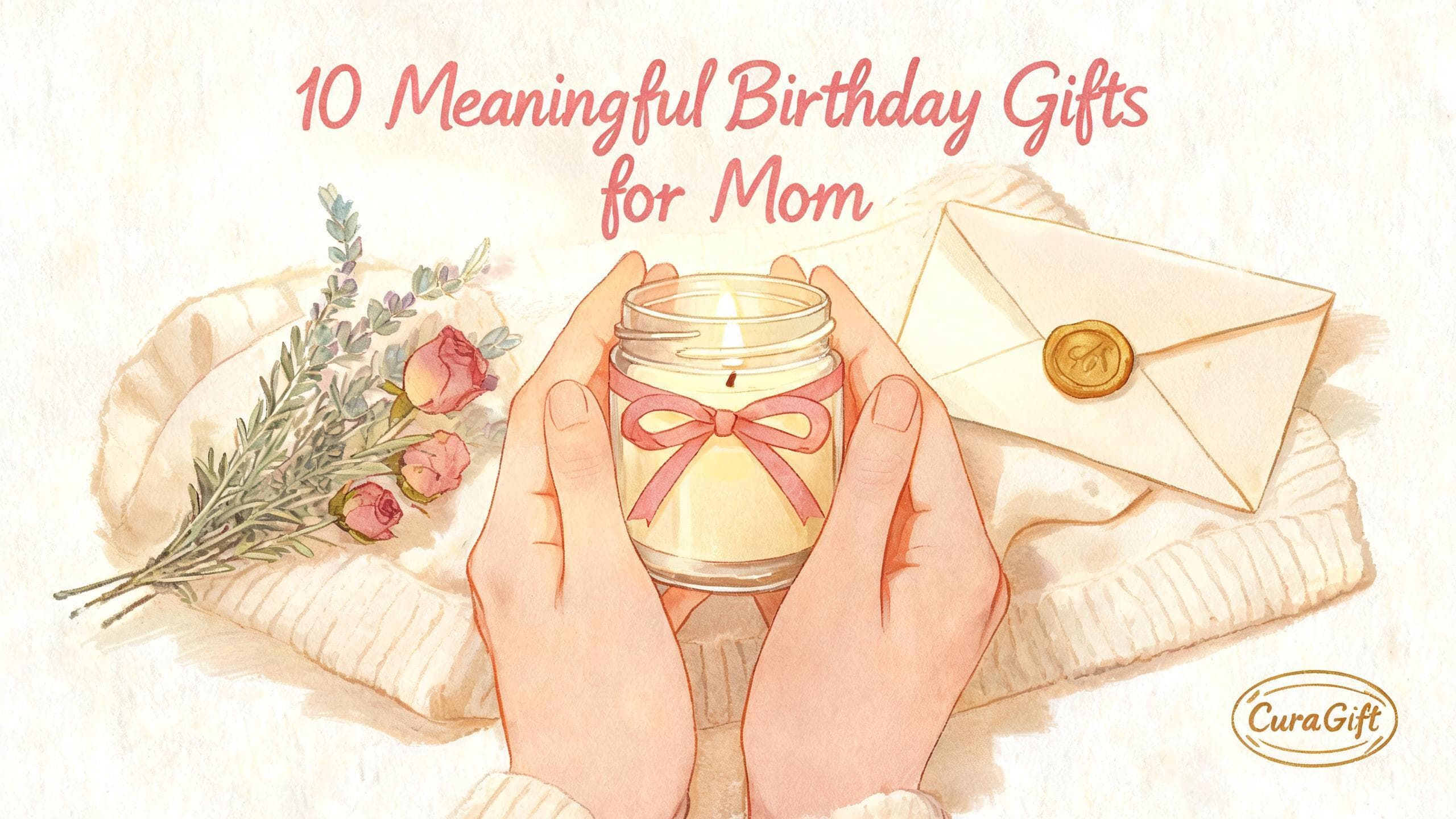
10 Meaningful Birthday Gifts for Mom She'll Treasure
Skip the generic flowers and candles. Discover thoughtful, handcrafted birthday gifts for mom that show you really know her, from keepsakes to self-care.
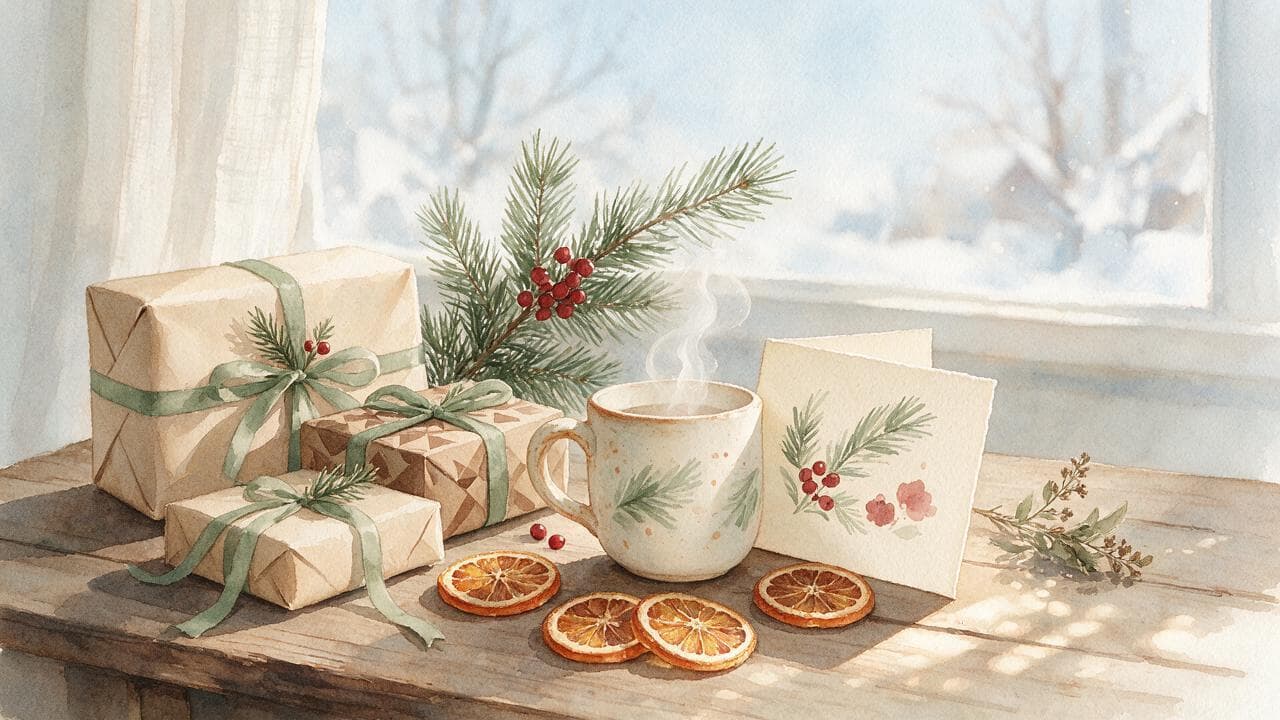
Christmas Gifts for Mom Who Doesn't Need Anything (20 Ideas)
Stuck on what to get mom for Christmas? Skip the generic candle sets. 20 thoughtful gift ideas that match her personality and what she actually wants.

Christmas Gifts Under $25 That Don't Look Cheap
A $25 ceiling does not mean a cheap gift. Christmas gifts under $25, organized by who you are buying for, plus what to avoid.